
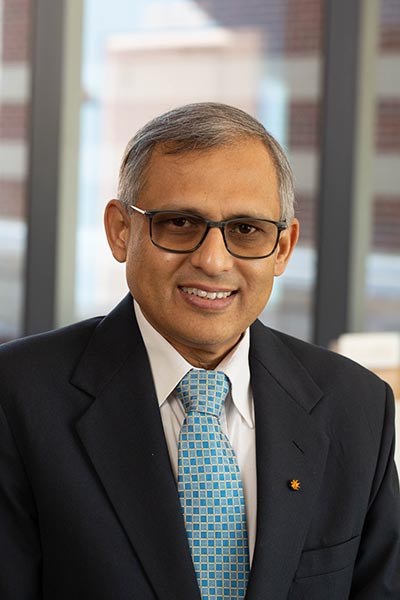
K. Sandeep Prabhu, Ph.D.
- Department Head
- Professor of Immunology and Molecular Toxicology
Shortlidge Road
University Park, PA 16802
- Email ksp4@psu.edu
- Office 814-863-8976
- Fax 814-863-6140
- Pronouns He/Him
- Name Pronunciation Sun-Deep Prah-Bhu
Areas of Expertise
- Redox biology with an emphasis on selenium and selenoproteins
- Macrophage biology- emphasis on inflammation and resolution
- Endogenous bioactive lipid mediators
- Cancer (leukemia) and leukemia stem cells
- Redox control of stress erythropoiesis during inflammation
Websites
Education
- Post-doc, Center for Molecular Toxicology, Penn State University (Mentor: Prof. C. Channa Reddy)
- PhD, Biochemistry, VMSRF-University of Mysore, India
- MSc, Biochemistry, University of Mysore, India
- BSc, Biochemistry, Yuvaraja College, University of Mysore, India
Graduate Programs
- Pathobiology
- Molecular Cellular Integrative Biosciences- Immunology & Infectious Disease Track and Cancer Biology Track (MCIBS)
- Nutritional Sciences
- Physiology
Teaching
VBSC 451 Immunotoxicology of Drugs and Chemicals (Coordinator & Instructor: Dr. Prabhu) (Fa semester; 3 Credits)
The immunotoxicology course focuses primarily on the effects of environmental chemicals, therapeutics, and recreational drugs on the immune system. Immunomodulatory mechanisms are examined at systemic, cellular and molecular levels. Discussions include theory, principles, and methodology and key issues in immunotoxicology. (3 Credits)
VBSC 438 Introduction to Molecular Pharmacology (Coordinator: Dr. Adam Glick/Co-instructor: Dr. Prabhu) (Sp Semester; 3 Credits)
Molecular interactions between drugs and their tissue receptors and possible modifications of drugs to target different receptors will be discussed. Drugs used to treat infectious disease, cardiovascular disease, immune modulators, and anti-cancer drugs will be examined for their molecular interactions. Students will understand the complexities of new drug design and development from the initial stages of laboratory development to final approval for use by the Food and Drug Administration. (3 Credits)
VBSC 514 (NUTRN 514) Prostaglandins and Leukotrienes (Alternate Sp semester; Coordinator: Dr. Prabhu; 3 Credits)
The course provides an in-depth coverage of how fatty acids are metabolized in eukaryotes by various enzymatic and non-enzymatic mechanisms. The course will emphasize on the physiological roles of these fatty acid oxidation products in general health, inflammation, and reproduction along with their cellular basis of action via receptor-dependent and -independent mechanisms. (3 Credits)
Research
Research projects in our laboratory focus on the following areas:
- Effect of selenium on leukemia stem cells.
- Targeting leukemia using novel lipid mediators derived from n-3 and n-6 fatty acids.
- Redox-dependent metabolomic changes in immune cells and its relevance in resolution of inflammation.
- Effect of selenium and selenoproteins on gut inflammation with an emphasis on eicosanoid metabolism and macrophage polarization.
- Effect of host selenoproteins in helminth infection.
- Redox regulation of erythropoiesis.
Targeting of leukemia stem cells: In collaboration with Dr. Robert Paulson
youtube video - Penn State: Inspiring Collaboration
Research Group Members
Hangdi Gong (Di), Graduate Student (MCIBS Program)
Tai-Jung Lee (Reness), Graduate Student (MCIBS Program)
Deborpita Sarkar, Graduate Student (MCIBS Program)
Michael Quickel, Graduate Student
Kendall Kleinman, Undergraduate Researcher
Brooke Wunderler, Schreyer Honor Scholar and Undergraduate Researcher
Akshata M. Shastry, Undergraduate Researcher
Giselle Vitor, Undergraduate Researcher
Selected Publications
- Jia B, Zhaoe C, Minagawa K, Shike H, Claxton DF, Ehmann WC, Rybka WB, Mineishi S, Wang M, Schell TD, Prabhu KS, Paulson RF, Zhang Y, Shultz, LD and Zheng H (2023) Acute myeloid leukemia causes T cell exhaustion and Depeletion in a novel humanized graft-versus-leukemia model. J. Immunol. Sep 15:ji2300111. doi: 10.4049/jimmunol.2300111.
-
Qian F, Nettleford SK, Zhou J, Arner BE, Hall MA, Sharma A, Annageldiyev C, Rossi RM, Tukaramrao DB, Sarkar D, Hegde S, Gandhi UH, Finch ER, Goodfield L, Quickel MD, Claxton DF, Paulson RF, Prabhu KS (2023) Activation of GPR44 decreases severity of myeloid leukemia via specific targeting of leukemia initiating stem cells. Cell Rep. 2023 Jul 16;42(7):112794. doi: 10.1016/j.celrep.2023.112794. Epub ahead of print. PMID: 37459233
- Prabhu KS (2023) The selenoprotein P-LRP5/6-WNT3A complex promotes tumorigenesis in sporadic colorectal cancer. J Clin Invest. 2023 Jul 3;133(13):e171885. doi: 10.1172/JCI171885. PMID: 37395277; PMCID: PMC10313358.
- S. K. Nettleford, C. Liao, S. P. Short, R. M. Rossi, V. Singh, K. S. Prabhu (2023) Selenoprotein W ameliorates experimental colitis and promotes intestinal epithelial repair. Antioxidants 12, 850. https:// doi.org/10.3390/antiox12040850
- S. Misra, T-J Lee, A. Sebastian, J. McGuigan, C. Liao, I. Koo, A. D. Patterson, R. M. Rossi, M. A. Hall, I. Albert, K. S. Prabhu (2023) Loss of selenoprotein W in murine macrophages alters the hierarchy of selenoprotein expression, redox tone, and mitochondrial functions during inflammation. Redox Biol. Feb;59:102571. doi: 10.1016/j.redox.2022.102571.
- Nettleford SJ, Zhao L, Qian F, Herold MJ, Arner B, Desai D, Amin S, Xiong N, Singh V, Carlson BA, Prabhu KS (2020) The essential role of selenoproteins in the resolution of Citrobacter rodentium-induced intestinal inflammation. Front. Nutr. doi:10.3389/fnut.2020.00096
- Chen Y, Xiang J, Qian F, Diwakar BT, Ruan B, Hao S, Prabhu KS, Paulson RF (2020) Epo-receptor signaling in macrophages alters the splenic niche to promote erythroid differentiation [published online ahead of print, 2020 Apr 29]. Blood. 2020;blood.2019003480. doi:10.1182/blood.2019003480
- Qian F, Misra S, Prabhu KS (2020) Selenium and selenoproteins in prostanoid metabolism and immunity. Crit Rev Biochem Mol Biol. 2020 Jan 30:1-33. doi: 10.1080/10409238.2020.1717430. [Epub ahead of print]. PMID: 31996052
- N. I. Dhanjal, S. Sharma, A. V. Skalny, M. G. Skalnaya, O. P. Ajsuvakova, A. A. Tinkov, F. Zhang, X. Guo, K. S. Prabhu, N. Tejo Prakash (2019) Food & Function. DOI: 10.1039/c9fo00186g. PMID: 31062009
- M. S. Sumanth, K.V. Abhilasha, S. P. Jacob, V. H. Chaitra, V. Basrur, B. Willard, T. M. McIntyre, K.S. Prabhu, G. K. Marathe (2019) Acute phase protein, a-1-acid glycoprotein (AGP-1) has differential effects on TLR-2 and TLR-4 mediated responses. Immunobiol. Jun 20. Pii. S0171-2985 (19)30116-0. PMID: 31239174
- B. T. Diwakar, R. Yoast, S. K. Nettleford, F. Qian, T-J Lee, S. Berry, I. Huffnagle, R.M. Rossi, M. Trebak, R. F. Paulson, and K. S. Prabhu (2019) Crth2 receptor signaling downregulate lipopolysaccharide-induced NF-kB activation in murine macrophages via changes in intracellular calcium. The Faseb J Sep 13:fj201802608R. doi: 10.1096/fj.201802608R. PMID: 31518163
- K. Abhilasha, M. Sumanth, V. Chaitra, S. Jacob, A. Thyagarajan, R. P. Sahu, R. Rajaiah, K. S. Prabhu, K. Kemparaju, J. B. Travers, C-H Chen, G. K. Marathe (2019) p38 MAP Kinase inhibitor protects against platelet-activating factor-induced death in mice. Free Radic. Biol. Med (In Press) 143:275-287. PMID: 31442556
- L. F. Bennett, L. Chang, M. D. Quickel, B. S. Yoh, M. Vijay-Kumar, P. Hankey-Giblin, K. S. Prabhu, R. F. Paulson (2019) Inflammation induces stress erythropoiesis through heme-dependent activation of SPI-C. Science Signaling, 12(598), eaap 7336 (DOI: 10.1126/scisignal.aap7336)
- Kong Y, Jia B, Zhao C, Claxton DF, Sharma A, Annageldiyev C, Fotos JS, Zeng H, Paulson RF, Prabhu KS, Zheng H. (2019) Downregulation of CD73 associates with T-cell exhaustion in AML patients. J Hematol Oncol. 2019 Apr 24;12(1):40. PMID: 31014634
- Korwar AM, Shay AE, Basrur V, Conlon K, Prabhu KS (2019) Selenoproteome Identification in Inflamed Murine Primary Bone Marrow-Derived Macrophages by Nano-LC Orbitrap Fusion Tribrid Mass Spectrometry. Journal of The American Society for Mass Spectrometry. 2019; 30(7):1276-1283. doi: 10.1007/s13361-019-02192-9. PMID: 30972724
- Liao C, Prabhu KS, Paulson RF (2018) Monocyte derived macrophages expand the murine stress erythropoietic niche during the recovery from anemia. Blood. 2018 Oct 15. pii: blood-2018-06-856831. doi: 10.1182/blood-2018-06-856831. [Epub ahead of print] PMID:30322871 [Selected for "News and Views" Stressed about erythropoiesis: EBI macrophages! M. Haldar, Blood (2018)132:2530-2532]
- Liao C, Hardison RC, Kennett MJ, Carlson BA, Paulson RF, Prabhu KS (2018) Selenoproteins regulate stress erythroid progenitors and spleen microenvironment during stress erythropoiesis. Blood 131(23):2568-2580; PMID: 29615406. [Selected for "News and Views" Stress erythropoiesis: selenium to the rescue! B. M. Dulmovits and L. Blanc. Blood (2018) 131:2512-2513]
- Liao C, Carlson BA, Paulson RF, Prabhu KS (2018) The Intricate Role of Selenium and Selenoproteins in Erythropoiesis. Free Radic Biol Med. Apr 29. pii:S0891-5849(18)30772-X. doi: 10.1016/j.freeradbiomed.2018.04.578. [Epub ahead of print] Review. PMID: 29719207.
- Jaiswal SK, Prakash R, Prabhu KS, Tejo Prakash N (2018) Bioaccessible selenium sourced from Se-rich mustard cake facilitates protection from TBHP induced cytotoxicity in melanoma cells. Food Funct. Apr 25;9(4):1998-2004. doi: 10.1039/c7fo01644a. PMID: 29644347; PMCID: PMC5918226.
- Nettleford SK, Prabhu KS (2018) Selenium and Selenoproteins in Gut Inflammation-A Review. Antioxidants (Basel). Mar 1;7(3). pii: E36. doi: 10.3390/antiox7030036. Review. PMID: 29494512; PMCID: PMC5874522.
- Shay AE, Diwakar BT, Guan BJ, Narayan V, Urban JF Jr, Prabhu KS (2017) IL-4 Upregulates expression of cyclooxygenase-1 in macrophages. J. Biol. Chem. Jul 6. pii: jbc.M117.785014. doi: 10.1074/jbc.M117.785014. [Epub ahead of print]
- Finch ER, Tukaramrao DB, Goodfield LL, Quickel MD, Paulson RF, Prabhu KS (2017) Activation of PPARγ by endogenous prostaglandin J2 mediates the antileukemic effect of selenium in murine leukemia. Blood. Jan 23. pii: blood-2016-08-736405. doi: 10.1182/blood-2016-08-736405.PMID:28115365
- VN Gladyshev, ES Arnér, MJ Berry, R Brigelius-Flohé, EA Bruford, RF Burk, BA Carlson, S Castellano, L Chavatte, M Conrad, PR Copeland, AM Diamond, DM Driscoll, A Ferreiro, L Flohé, FR Green, R Guigó, DE Handy, DL Hatfield, J Hesketh, PR Hoffmann, A Holmgren, RJ Hondal, MT Howard, K Huang, H-Y Kim, IY Kim, J Köhrle, A Krol, GV Kryukov, BJ Lee, BC Lee, XG Lei, Q Liu, A Lescure, AV Lobanov, J Loscalzo, M Maiorino, M Mariotti, KS Prabhu, MP Rayman, S Rozovsky, G Salinas, EE Schmidt, L Schomburg, U Schweizer, M Simonović, RA Sunde, PA Tsuji, S Tweedie, F Ursini, PD Whanger, and Y Zhang (2016) Selenoprotein gene nomenclature. J. Biol.Chem. 291:24036-2404
- Lakshmikanth CL, Jacob SP, Kudva AK, Latchoumycandane C, Yashaswini PS, Sumanth MS, Goncalves-de-Albuquerque CF, Silva AR, Singh SA, Castro-Faria-Neto HC, Prabhu KS, McIntyre TM and Marathe GK (2016) Escherichia coli Braun Lipoprotein (BLP) exhibits endotoxemia – like pathology in Swiss albino mice. Sci. Rep. Oct 4;6:34666. doi: 10.1038/srep34666
- Prabhu KS and X. G. Lei (2016) Selenium- Supplement Information. Adv. Nutr. 7(2): 415-7.
- Nelson SM, Shay AE, James JL, Carlson BA, Urban JF, and Prabhu KS (2016) Selenoprotein expression in macrophages is critical for optimal clearance of parasitic helminth Nippostrongylus brasiliensis. J. Biol. Chem. 292: (In Press).
- Finch ER, Kudva AK, Quickel MD, Goodfield LL, Kennett MJ, Whelan J, Paulson RF, and Prabhu KS. (2015) Chemopreventive effects of dietary eicosapentaenoic acid supplementation in experimental myeloid leukemia. Cancer Prev. Res. (Phila). 2015 Aug 19. pii: canprevres.0050.2015. [Epub ahead of print]
- Narayan V, Kudva AK, Prabhu KS. Reduction of tetrathionate by mammalian thioredoxin reductase. Biochemistry. 2015 Aug 25;54(33):5121-4. [Spotlight in: Chem. Res. Toxicol. Oct 2015]
- Kudva AK, Shay AE, and Prabhu KS. (2015) Selenium and inflammatory bowel disease. Am. J. Physiol. Gastrointest. Liver Physiol. 309; G71-7
- Narayan V, Kodihalli RC, Liao C, Kaushal N, Carlson BA, and Prabhu KS. (2015) Epigenetic regulation of inflammatory gene expression in macrophages by selenium. J Nutr Biochem. 26(2):138-45
- Kaushal N, Kudva AK, Patterson AD, Chiaro C, Kennett MJ, Desai D, Amin S, Carlson BA, Cantorna MT, and Prabhu KS. (2014) Crucial role of macrophage selenoproteins in experimental colitis. J Immunol. 193(7):3683-92
- Gandhi UH, Kaushal N, Hegde S, Finch E, Kudva AK, Kennett MJ, Jordan CT, Paulson RF, and Prabhu KS. Role of endogenous eicosanoids in the suppression of leukemia by selenium. Cancer Res. 74(14):3890-901
- Vijay-Kumar M, Prabhu KS, and Rogers CJ.(2014) The Microbiome and obesity-an established risk for certain types of cancer. Cancer J. 20(3):176-80
- Kudva A, Kaushal N, Mohinta S, Kennett MJ, August A, Paulson RF, and Prabhu KS. (2013) Stability, bioavailability, and hypersensitivity of omega-3 derived anti-leukemic D12-PGJ3. PLoS One. Dec 2:8(12)
- Chen Y-C, Prabhu KS, and Mastro A. (2013) Dietary selenium supplementation modifies breast tumor growth and metastasis. Int J Cancer. 133; 2054-64
- Flock MR, Rogers CJ, Prabhu KS, and Kris-Etherton PM. (2013) Immunometabolic role of long-chain omega-3 fatty acids in obesity-induced inflammation. Diabetes Metab Res Rev. 29; 431-45
- Ravindra KC, Narayan V, Lushington GH, Peterson BR, and Prabhu KS. (2012) Targeting of Histone Acetyltransferase p300 by Cyclopentenone Prostaglandin Δ(12)-PGJ(2) through Covalent Binding to Cys(1438). Chem Res Toxicol. Feb 20; 25(2): 337-47
- Hegde, S, Kaushal N, Ravindra KC, Chiaro C, Hafer KT, Gandhi UH, Thompson JT, Vanden Heuvel JP, Kennett MJ, Hankey P, Paulson RF, Prabhu KS (2011) Delta12-prostaglandin J3, an omega-3 fatty acid-derived metabolite, selectively ablates leukemia stem cells in mice. Blood. Dec. 22; 118(26):6909-19
- Gandhi UH, Kaushal N, Ravindra KC, Hegde S, Nelson SM, Narayan V, Vunta H, Paulson RF, and Prabhu KS (2011) Selenoprotein-dependent Up-regulation of Hematopoietic Prostaglandin D2 Synthase in Macrophages Is Mediated through the Activation of Peroxisome Proliferator-activated Receptor (PPAR)g. J Biol Chem. 286:27471-82
- Nelson SM, Lei X, and Prabhu KS (2011) Selenium Levels Affect the IL-4–Induced Expression of Alternative Activation Markers in Murine Macrophages. J Nutr. Sept.; 141:1754-61
- Kaushal N, Hegde S, Paulson RF, and Prabhu KS (2011) The regulation of erythropoiesis by selenium. Antiox Redox Signal. 14:1403-12
- Narayan V, Ravindra KC, Chiaro C, Carey D, Aggarwal BB, Henderson AJ, and Prabhu KS (2011) Celastrol inhibits tat-dependent human immunodeficiency virus (HIV) transcription and replication. J Mol Biol. 410(5):972-83
- Chen Y-C, Sosnoski D, Gandhi UH, Novinger L, Prabhu KS*, and Mastro AM* (2009) Selenium modifies the osteoblast inflammatory stress response to bone metastatic breast cancer. Carcinogenesis. 30(11):1941-8 (*Corresponding authors)
- Kalantari P, Narayan V, Henderson AJ, and Prabhu KS (2009) 15-deoxy-PGJ2 inhibits HIV-1 transactivating protein, Tat, through covalent modification. FASEB J. Aug.; 23(8):2366-73
- Palempalli UD, Gandhi U, Kalantari P, Vunta H, Arner RJ, Narayan V, Ravindran A, and Prabhu KS (2009) Gambogic acid covalently modifies IkB-kinase-b subunit to mediate suppression of lipopolysaccharide-induced activation of NF-kB in macrophages. Biochem J. Apr. 15; 419(2):401-409
- Kalantari P, Narayan V, Natarajan SK, Muralidhar K, Gandhi UH, Vunta H, Henderson AJ, and Prabhu KS (2008) Thioredoxin reductase-1 negatively regulates HIV-1 transactivating protein Tat-dependent transcription in human macrophages. J Biol Chem. Nov 28; 283(48):33183-90
- Vunta H, Zamamiri-Davis F, Palempalli UD, Bhat D, Arner RJ, Thompson JT, Peterson DG, Reddy CC, and Prabhu KS (2007) The anti-inflammatory effects of selenium are mediated through 15-deoxy-Delta12,14-prostaglandin J2 in macrophages. J Biol Chem. June 22; 282(25):17964-73
- Coleman JD, Prabhu KS, Thompson JT, Reddy PS, Peters JM, Peterson BR, Reddy CC, Vanden Heuvel JP (2007) The oxidative stress mediator 4-hydroxynonenal is an intracellular agonist of the nuclear receptor peroxisome proliferator-activated receptor-beta/delta (PPARbeta/delta). Free Radic Biol Med. Apr 15; 42(8):1155-64
Book Chapters
Diwakar BT, E. R. Finch, C. Liao, A. E. Shay, and K. S. Prabhu (2016) The role of selenoproteins in resolution of inflammation. In Selenium: Its Molecular Biology and Role in Human Health (2016) 4th Edition. Eds. D. L. Hatfield, U. Schweizer, P. Tsuji, and V. N. Gladyshev. Springer Publications. Chapter 42, pp 499-510.
Prabhu, K.S., Kudva, A. K., and Nelson, S.M. Selenium mediates a switch in macrophage polarization in "Diversity of Selenium Function in Health and Disease" Eds. R. Brigelius-Flohe and H. Sies. CRC Press; Chapter 14, pp 293-308, 2016
Kaushal, N., Narayan, V., Gandhi, U. H., Nelson, S. M., Kotha, A.K., and Prabhu, K.S. Inflammation, oxidative stress, and antioxidants. In “Chronic Inflammation: Nutritional & Therapeutic interventions." Eds. S. Roy, D. Bagchi, and S. P. Raychaudhuri. CRC Press (New York); Chapter 19, pp 259-273, 2012.
Kaushal, N., Gandhi, U. H., Nelson, S. M., Narayan, V., and Prabhu, K. S. 2011. Selenium and Inflammation. In Selenium: Its Molecular Biology and Role in Human Health 3rd Edition. Eds. D. Hatfield, M. Berry, V. N. Gladyshev, Springer Publications. Chapter 35, pp 443-456, 2012.
Honors and Awards
Deborpita Sarkar- NIH STRESS PHYSIOL T32 training grant recipient
Dr. Sougat Misra- RAIN Grant Award, College of Agricultural Sciences, Penn State
Dr. Sougat Misra- MIST Grant Award, College of Agricultural Sciences, Penn State
Dr.Fenghua Qian- Best Poster Award, Penn State Cancer Institute Retreat; Best poster award MCIBS Program Retreat
Dr.Shaneiece Nettleford- Invited Lecture, Am Soc Nutrition Annual Meeting, Baltimore
Dr. Diwakar BT- Best Poster Award- Penn State Cancer Institute Retreat
Dr. K. Sandeep Prabhu, Elected Fellow, AAAS (2017; Biological Sciences)
Dr. Ashley Shay- NIH/NIEHS Graduate Student Travel Award
Dr. Emily Finch- AICR Travel Award
Dr. Ashley Shay- T32 Trainee Award
Dr. Avinash Kudva- Travel Award- International Symposium on Bioactive Lipids in Cancer, Inflammation, and Related Diseases, Eicosanoid Research Foundation Meeting, San Yuan, PR
Dr. Naveen Kaushal- Travel Award- International Selenium Symposium, Berlin
Dr. Emily Finch, NIH Penn State-CTSI Award
Dr. Shakira Nelson, NCI Cancer Prevention Fellowship Program & Post-doctoral Fellowship, NCI, Bethesda
Dr. Vivek Narayan, ASBMB Travel Award
Dr. Ujjawal Gandhi, ASBMB Travel Award
Dr. Shakira Nelson, ASBMB Travel Award
Lab Alumni
Dr. Fenghua Qian, Sr. Scientist, Regeneron Pharmaceuticals, NY
Dr. Shaneice Nettleford, Graduate Student (Pathobiology); Current position: Post-doc, Department of Gastroenterology, Hepatology and Nutrition, Children's Hospital of Philadelphia, Philadelphia
Vanessa Peduzzi, Undergrad Student Researcher (IID Program; Schreyer's Honors College);
Brooke Arner, Undergrad Student Researcher (IID Program; Schreyer's Honors College); Current position: MD Student, Penn State College of Medicine, Hershey
Morgan Herold, Undergrad Student Researcher (Schreyer's Honors College); Current position: PA School
Manoti Tare, Graduate Student (MS Biotech Program)
Dr. Arvind Korwar, PhD (Post-doctoral Research Scholar) Current Position: Assistant Professor, National Institute of Biomedical Genomics, Kalyani, India
Dr. Chang Liao, PhD (Graduate Student- Pathobiology; MS Applied Statistics) Current Position: HHMI-Research Associate, UCSF
Alexandra Nader, Undergraduate Student (Millennium Program Scholar); Current Position: MD Student, University of Pennsylvania School of Medicine, Philadelphia
Svanjita Berry (Undergraduate Student) Current Position: MD Student
Dr. Diwakar T. Bastihalli, PhD (Post-doctoral Research Scholar) Current Position: Research Associate Faculty, Penn State University College of Medicine, Hershey
Dr. Ashley Shay, PhD (Graduate Student- Molecular Medicine) Current Position: Assistant Research Professor and Director of Metabolomics, Penn State University, PA
Dr. Emily Finch, PhD (Graduate Student- Immunology/Infectious Disease and CTSI Scholar); Current position: Staff Scientist, St.Judes Children's Research Hospital, Memphis, TN.
Dr. Laura Goodfield, Phd (Post-doctoral Research Scholar); Current position: Scientist, Sanofi-Aventis, Boston Area
James Frisbie, Undergrad Student (Schreyer's Honors College); Current position: MD Student, University of Maryland
Dr. Ashok H. Gopalakrishna, PhD (Post-doctoral Research Scholar); Current position: Institute of Stem Cell Biology, Bangalore, India
Dr. Avinash Kudva, PhD (Post-doctoral Research Scholar); Current position: Assistant Research Professor, Penn State University College of Medicine, Hershey
Hunter Fraker Undergrad Student (Schreyer Honors College); Current position: MD Student, George Washington University, Washington, D.C.
Dr. Vivek Narayan, PhD (Graduate Student); Current position: Sr. Scientific Writer, GSK Pharmaceuticals, Bengaluru, India
Dr. Naveen Kaushal, PhD (Post-doctoral Research Scholar); Current position: Assistant Professor, Department of Biophysics, Panjab University, Chandigarh, India
Nicole Wilski, BS (Undergrad Student); Current position: Graduate Student; Thomas Jefferson University - Microbiology & Immunology Program
Dr. Shakira Nelson (Graduate Student- Pathobiology); Current position: Program Officer, National Institutes of Health
Sara Farwell (BS Student); Current position: Scientist, Sanofi Pasteur, Allentown Area
Steven Cornelius (BS Honors Student); Current position: MD Student, Penn State Hershey College of Medicine
Kayleigh McCormick (BS Honors Student); Current position: DVM Student, UPENN
Dr. Ujjawal H. Gandhi, M.B.,B.S. PhD (PhD Molecular Toxicology); Current position: Adjunct Assistant Professor & Hematologist/Oncologist, UNC Health, Cary, NC
Dr. Tejo Nagaraja, PhD DBT-CREST Visting Professor; Current position: Professor & Associate Dean, Thapar University, India.
Dr. Uma Palempalli, DBT-CREST Visiting Professor; Current position: Professor, SV University for Women, Tirupati, India.
Dr. Ravindra C. Kodihalli (Post-doctoral Scholar); Current position: Sr. Scientist, Pfizer, MA.
Dr. Anil Kotha, PhD (Post-doctoral Scholar); Current position: Scientist, Indus Gene Expression Systems, India
Kelsey Hafer (BS Schreyer's Honors Student); Current position: Veterinarian, Women's Humane Society- Animal Hospital, Bensalem, PA
Amanda Tuchinsky (BS Schreyer's Honors Student);Current position: MD Student, Jefferson Med School
Prof. P. Reddanna (Visiting Professor); Professor and Dean- School of Life Sciences, University of Hyderabad, India
Pranav Maddali, BS (Research Tech); Current position: PhD Student; RPI- Albany, NY
Dr. Christopher Chiaro, PhD (Post-doctoral Research Scholar); Current position: Post-doc, Patterson Lab- Metabolomics Core; Penn State
Dr. Ryan J. Arner, PhD (Research Associate); Current position: Scientific Consultancy, Arner Inc.
Dr. Parisa Kalantari (Post-doc); Currently: Assistant Professor, Penn State University, PA
Dr. Hema Vunta (PhD-Pathobiology) Currently: Pharmacist, Cincinnati, OH
Dr. K. Muralidhar (Visiting Professor) Current position: Professor of Zoology, University of Delhi, India
Stephanie Larson (MS- Pathobiology) Current position: Physician-Emergency Medicine, Erie, PA
Jessica Stahle (BS- Honors) Current position:Resident in Radiology, Department of Small Animal Clinical Science, Virginia-Maryland College of Veterinary Medicine
Deepa Bhat (BS Honors) Current position: Senior Product Manager, Genentech
Katie Miro (BS Honors) Currently: Physician- Internal Med, Bellevue Hospital Ctr, NYC
